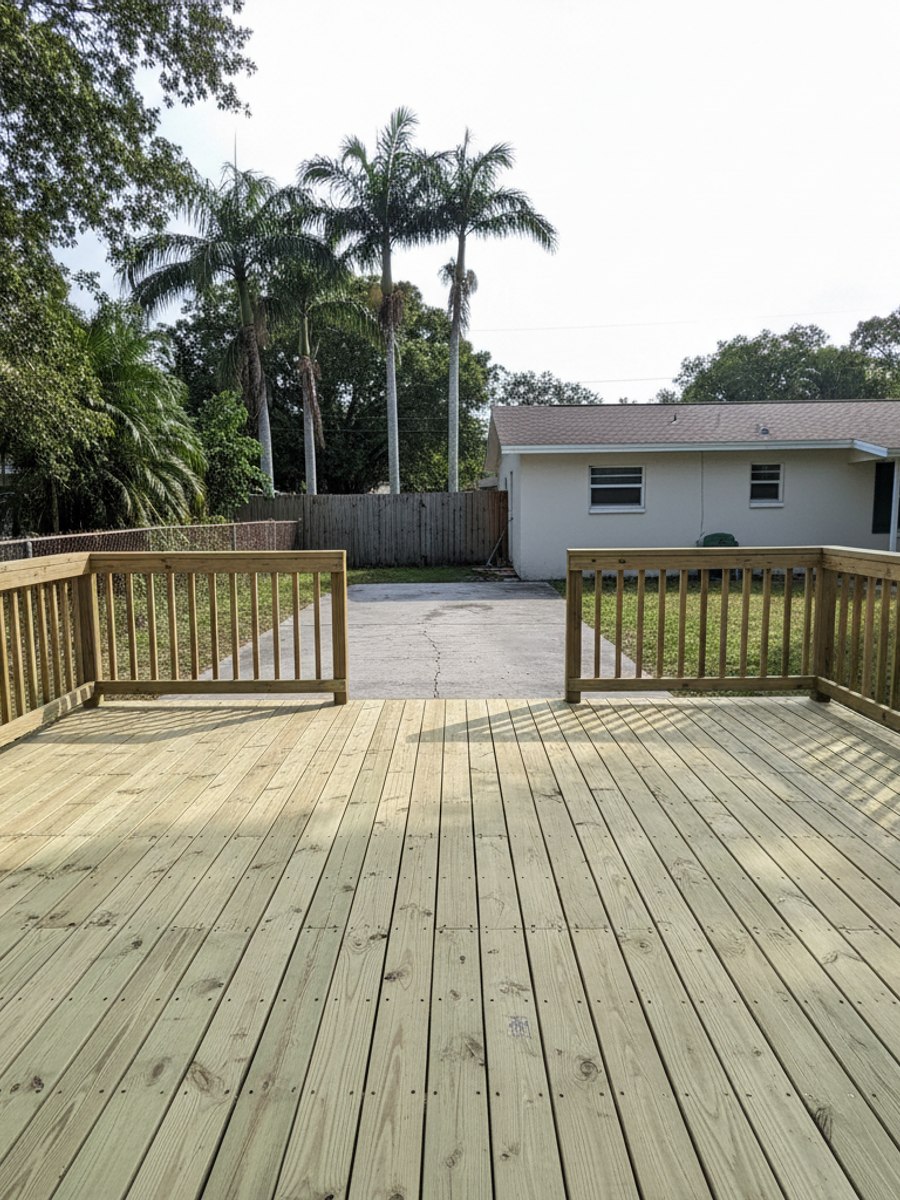
Hallandale Beach sits on sand, not clay, and that changes more about your deck than most homeowners expect. Sandy soil drains fast, which sounds good until you realize it also shifts under a footing that wasn't poured deep enough or reinforced right. Add a water table that can sit just a few feet down depending on where you are, from the older lots near Three Islands to the newer builds further west, and you've got a foundation problem before anyone's even talked about lumber.
Then there's the air itself. Salt air off the Intracoastal and the ocean eats galvanized steel screws in a few years if they're the wrong grade. It corrodes cheap flashing. It works into any gap in a coating and starts rot or rust from the inside. A deck builder who's worked here for any length of time knows this without being told. One who doesn't ask about your proximity to saltwater, or doesn't mention fastener grade at all, hasn't thought about it.
What the local conditions actually demand
South Florida building code isn't the same as code inland. Wind load matters here because hurricane season runs June through November, and a deck attached to your house with the wrong ledger connection can become a lever that pulls siding off the wall in a storm. Framing here should account for uplift, not just weight. Ask what fastening system they use to tie the deck ledger to the house rim joist, and whether they're using structural screws or lag bolts rated for it, not just whatever's in the truck.
Footings in sandy soil generally need to go deeper than people assume, often 12 to 18 inches below grade at minimum with a wider concrete base to spread the load, sometimes more depending on the deck's height and what's holding it up. If a contractor gives you a footing spec without ever mentioning your soil or your elevation, they're using a generic answer, not one for your lot.
Licensing, insurance, and the permit that actually gets pulled
In Hallandale Beach and Broward County generally, a deck attached to the house or elevated more than a token amount requires a permit. That means a plan reviewed for wind load and structural connections, an inspection at the footing stage before it's covered with dirt, another at framing before decking goes down, and a final inspection before it's signed off. This isn't paperwork for its own sake. It's the only outside check that someone other than the builder looked at the footings before they're buried for good.
A contractor who tells you permits aren't necessary for a low deck, or offers to skip it to save time, is asking you to trust that every connection is right with no second opinion. Permitting usually adds a few weeks to the schedule, sometimes longer if the plan needs revisions. That's a real cost in time. It's a smaller cost than finding out the hard way that a ledger board was face-nailed instead of properly bolted.
Ask to see their license number and general liability insurance, and ask if they carry workers' comp for anyone on the crew. If they hesitate or say it's not necessary for a job this size, that's the moment to end the conversation.
What the contract and materials should say
A real proposal names the lumber species and grade, or the specific composite product line, not just "decking." It names the fastener type, hidden clips or face screws, and whether they're stainless or coated for coastal exposure. It should mention joist tape or flashing tape over the top of the joists, which keeps water from sitting in the wood grain where screws puncture it, a cheap step that adds years to a frame's life in a humid climate like this one.
For composite decking, boards need a small gap between them, usually around 1/8 inch, because the material expands and contracts with heat, and Hallandale summers push surface temperatures well past what the boards see up north. A contractor who installs composite tight against itself either hasn't done it before or isn't paying attention.
Get the framing lumber spec in writing too. Pressure-treated pine is standard, but the treatment level matters for ground contact versus above-grade use, and in a high-humidity coastal environment the difference shows up in five years, not twenty.
Red flags that mean you walk
- A quote that's dramatically lower than every other bid, with no explanation of what's different about the materials or scope.
- Pressure to pay the full amount up front, before any material is delivered.
- No mention of a permit, or a suggestion that you don't need one.
- No written contract, just a handshake and a start date.
- Can't tell you what fastener or flashing they use, or brushes off the question.
None of these on their own is automatically disqualifying, but two or more together usually is. A cash deal with no permit and no contract might save a few hundred dollars now and cost a full rebuild later, especially once salt air and Florida summers have a few seasons to work on shortcuts.
Older lots versus newer subdivisions
If your house is one of the older ones near the beach or in the neighborhoods built in the 1950s and 60s, there's a decent chance the existing patio slab, old footings, or utility lines aren't where the original plans say they are. A builder working on a property like that should plan for a locate call before digging and shouldn't be surprised if what's in the ground doesn't match expectations. Newer construction further from the water tends to have more predictable soil and fewer surprises underground, but pool decks in those subdivisions come with their own issue: the deck surface has to handle constant wet-dry cycling and pool chemicals, which rules out some finishes entirely.
Waterfront communities and condos in this area often have an HOA with its own approval process on top of the city permit, sometimes stricter on railing height or material appearance than code requires. Ask upfront whether your property has one, and ask your contractor if they've dealt with that HOA before. If they haven't, that's not disqualifying, but it means the timeline might run longer than they're estimating.
A good deck builder in this area will talk about your soil, your sun exposure, your distance from saltwater, and your permit before they talk about board colors. If that's the conversation you're having, you're probably in good hands. If you want to see how we handle that conversation and what we actually build, look at Infinite Deck Company.